How to Quiet Your Inner Critic
That harsh internal voice narrating your every flaw is not the truth, and it is not helping. Here is where it comes from and how to turn the volume down.
Practical, compassionate tools drawn from cognitive behavioral therapy (CBT) to stop the rumination, the endless what-ifs, and the 3am spirals, so you can spend far less of your life trapped in your own thoughts.
Free articles, real tools, and a five-book library. No hype, no fake studies, honest about when to see a professional.
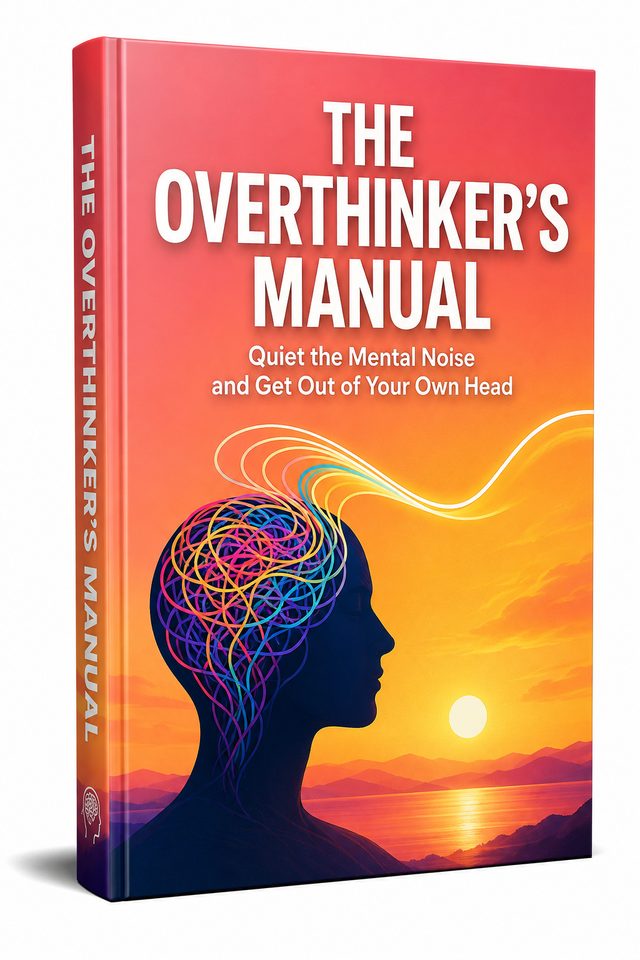
You know the loop is useless. You have known it for an hour. And it still runs. Knowing better has never once been enough to switch it off, so we teach the skills that are.
You wake at three and your mind is a churning engine of worst cases. Everything feels enormous, and sleep is gone.
A conversation ended hours ago and it is still running, every word re-scrutinized, every pause reinterpreted.
You have made and unmade the same choice a dozen times, unable to commit for fear of the option you have not considered.
New to this? A short, friendly map of what overthinking is and the first tools to try today.
Read the guide →A thought record, a worry sorter, a breathing timer, and a gentle self-check you can use right now.
Open the tools →Clear, practical, well-sourced guides on rumination, worry, sleep, decisions, and more.
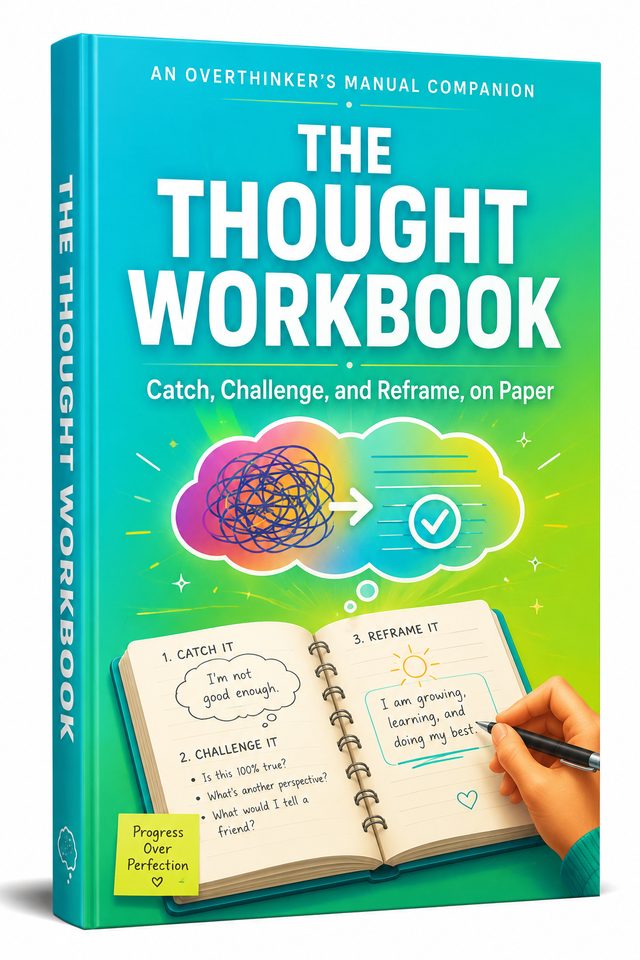
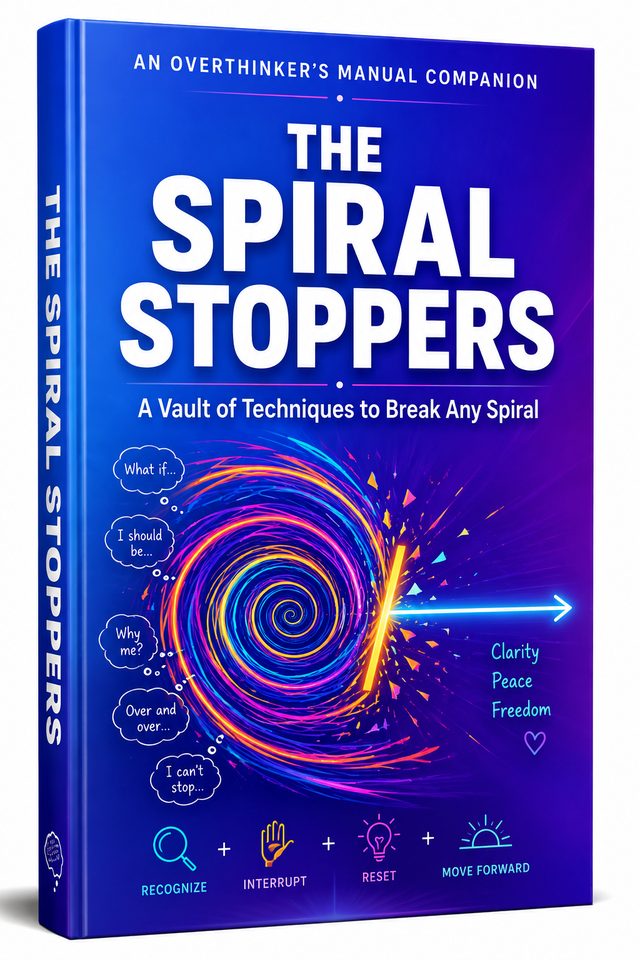
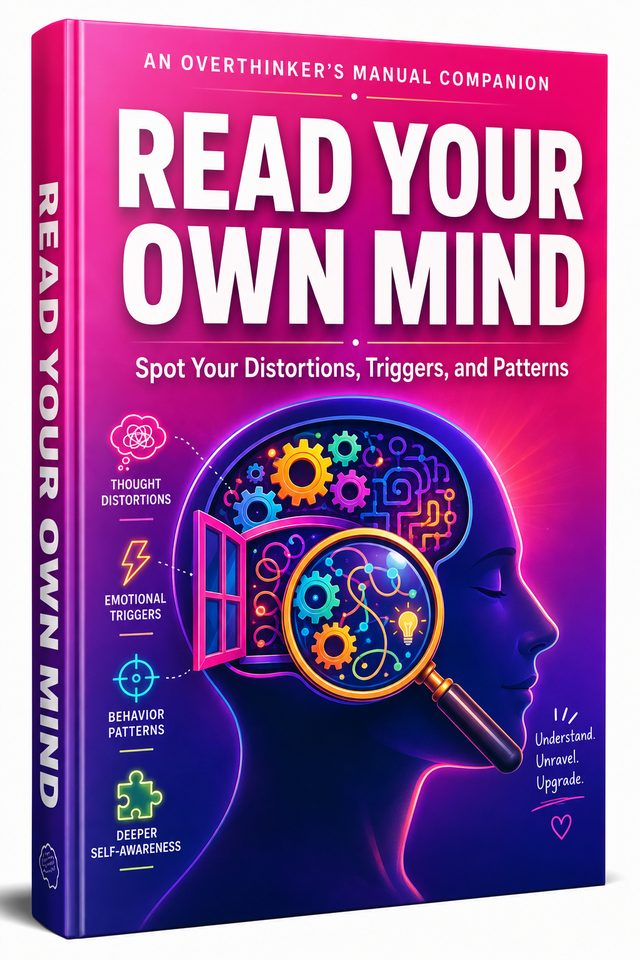
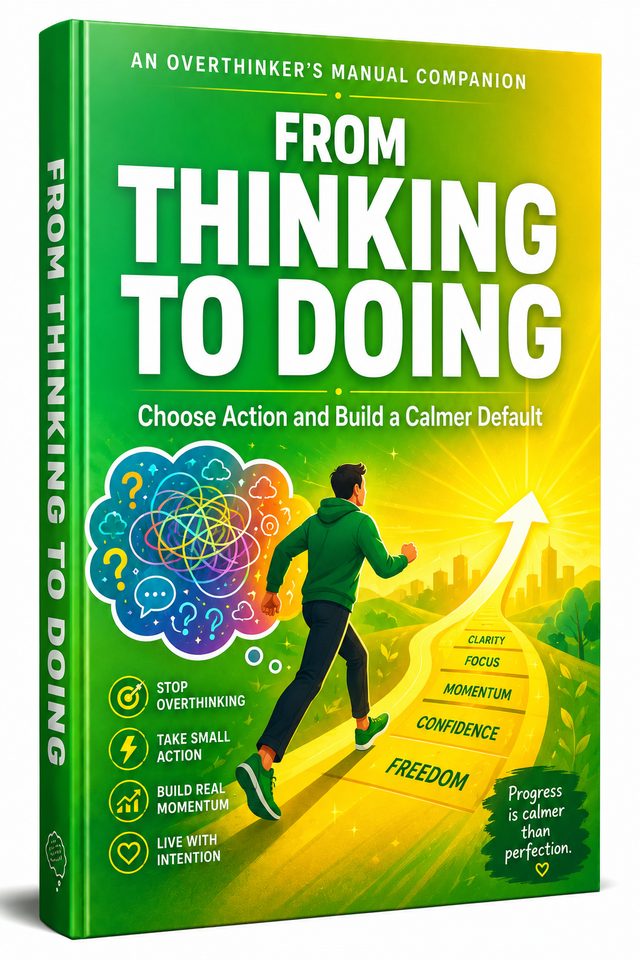
Browse articles →The main book teaches the why and the how. The companions are the tools you use at each step.
That harsh internal voice narrating your every flaw is not the truth, and it is not helping. Here is where it comes from and how to turn the volume down.
A practical, step-by-step way to break a stuck decision, built for overthinkers who have already thought about it far too much.
Reading into texts, replaying conversations, needing constant reassurance. Overthinking can quietly strain a relationship. Here is how to loosen its grip.
A mind absorbed in a meaningful life has less room to spiral. Here is how clarifying your values and acting on them quietly quiets overthinking.
Your mind produces thousands of thoughts a day. Most are noise. Learning to tell signal from noise is one of the most freeing skills there is.
You are certain they judged you, found you boring, or were annoyed. But you cannot actually read minds, and your anxiety is a terrible guesser.
Almost everyone does it, and it is not a sign that something is wrong with you. With a few good tools it gets quieter. And if you ever want more, we point you toward friendly, non-commercial resources.
More support